Artwork designed for a specific site and the people who use it.
Custom painting, mosaic, and integrated design for architectural and civic spaces.
Each project starts with the site: its architecture, its light, the people who will encounter the work. The design follows from there.
The Work
Custom artwork for architectural and civic spaces, designed for a specific site and a specific audience. I design and direct these projects from concept through installation, producing studio work myself and sometimes partnering with trusted fabricators and installers for fabrication, installation and other on-site work.
Examples include lobby murals, integrated artwork and wayfinding systems for multi-unit buildings, exterior signage and mural work, and mosaic installations for civic and commercial contexts.
Painting commissions at studio scale follow a different process. Visit Commissions or reach out to discuss.
How I Work
Many public art projects begin with a Request for Proposals or Qualifications from a public agency. Others come through a public art consultant managing a project on behalf of a client. Some are direct hires from developers, hospitality groups, or property owners with a site in mind.
1. Project scoping and site visit.
The early phase is about getting clear on the site, the audience, the timeline, and the design direction. I visit the site, study its ecology and history, and meet with the people involved. I research the space, surrounding environment, and the people who will encounter the work.
2. Design proposal, contract, and deposit.
I deliver a written design proposal with scope, timeline, deliverables, and fee, calibrated to the complexity of the project. A signed contract and deposit start the work.
3. Design development.
I work closely with the client and design team as I refine the design through sketches, color studies, and material samples as needed.
4. Studio production and fabrication.
Unless the work is produced on site, I develop painted work in the studio. For mosaic projects, I build the work in the studio or partner with a fabricator, depending on the scale, materials, and timeline. Then I deliver the work to the site ready to install.
5. Installation and documentation.
I coordinate installation with the client and contractors and stay involved through completion. Each project is professionally documented during production and at completion.
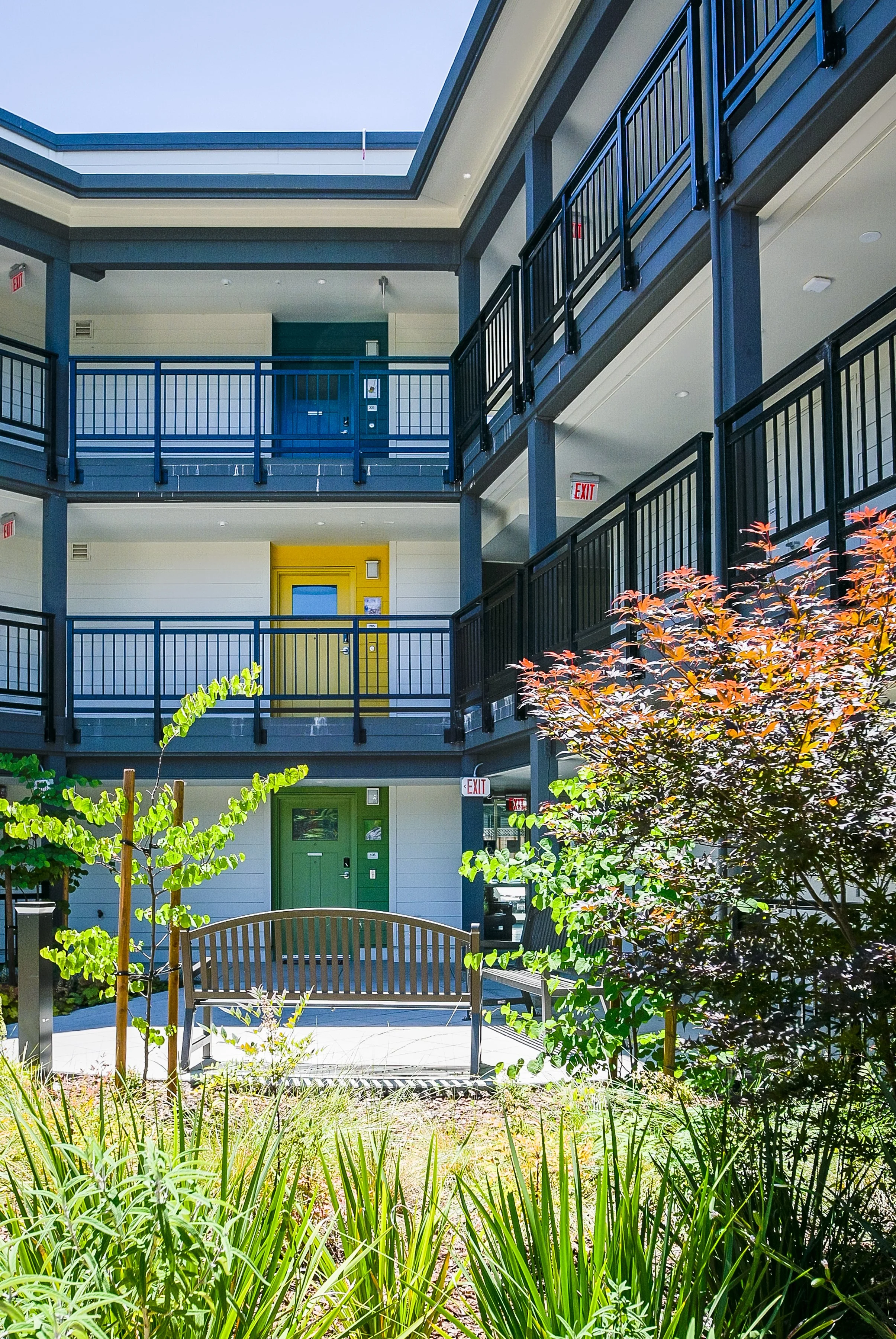
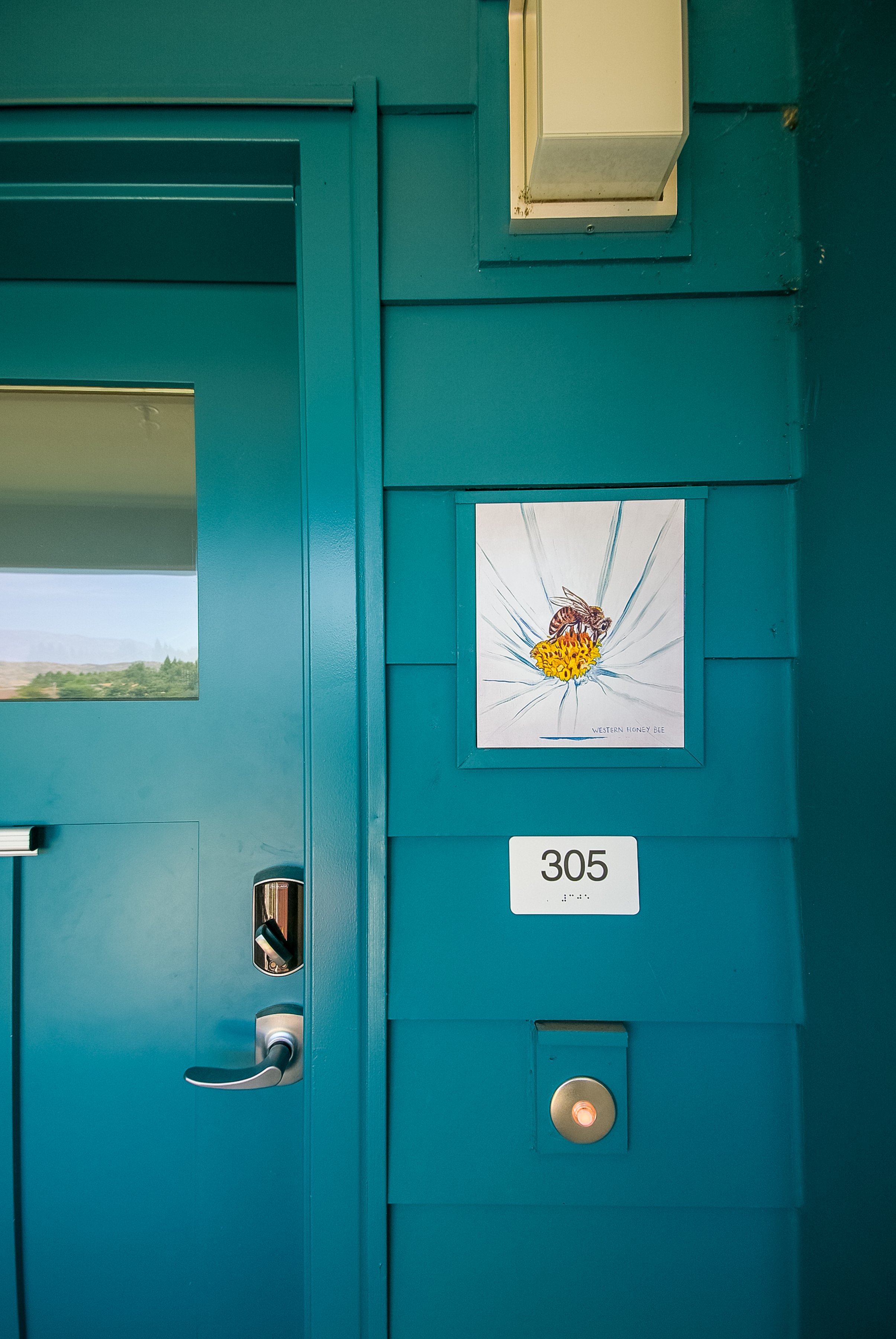
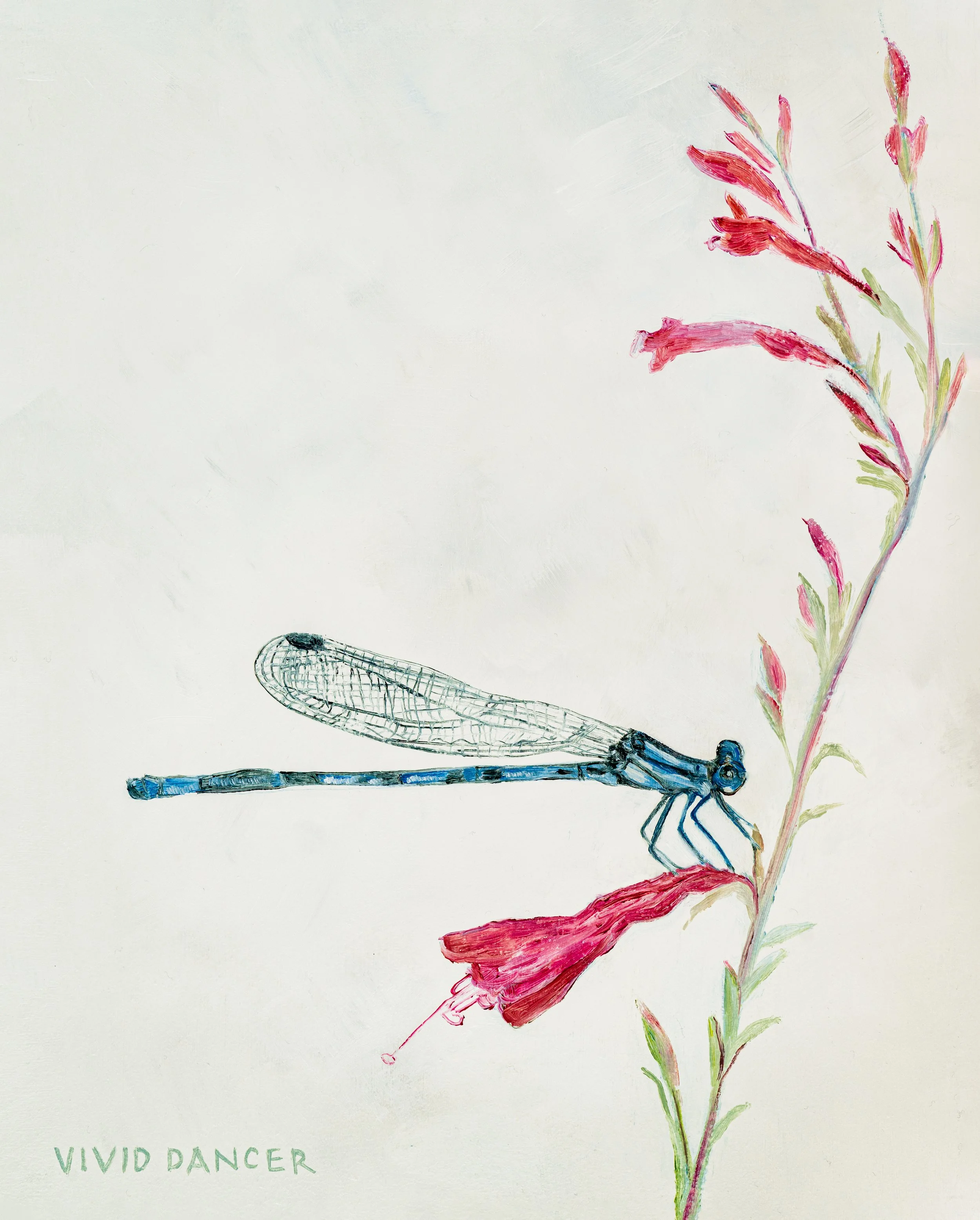
Heritage House and Valle Verde, Napa, CA
Painted artwork wayfinding system, 2022–2025. Burbank Housing, Napa. Commissioned with support from the Peter A. and Vernice H. Gasser Foundation.
Case Study:
Coming Home-Napa Native Species
These sister housing developments were designed side by side, and I created a unified art concept to serve both communities. The theme of "home" guided the work at both sites, reflecting the idea that home is not only a physical place, but also a feeling of connection, identity, and belonging.
At Heritage House, permanent supportive housing for formerly unhoused residents, I created Napa Native Flora, featuring 66 native plant species. Next door at Valle Verde, affordable family housing, I created Napa Native Fauna, with 33 native animal species. Together they make 99 unit ID paintings, 8”x10” oil on panel, one installed by each resident's front door, each a different Napa native species.
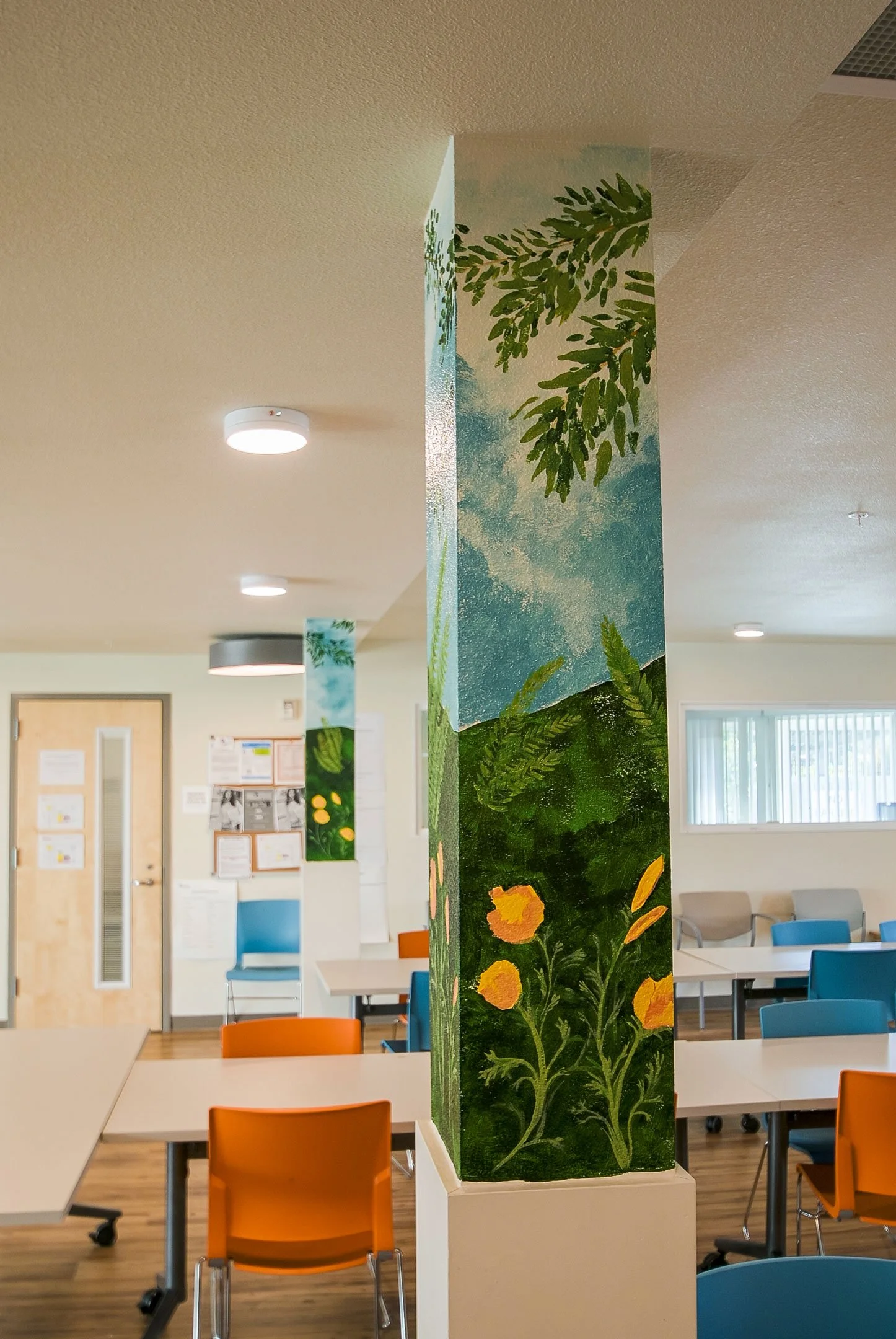
Eighteen wayfinding murals, three per floor across both buildings, organize the spaces by habitat layer, each building telling the story in its own language. At Heritage House the floors rise through native plants: California sword fern at the water and forest floor, California poppy in the shrub and understory layer, coast live oak reaching into the canopy. At Valle Verde the same ascent is told through the animals that live there: a delta smelt in the water below, the tracks of brush rabbit, coyote, and mountain lion at the middle layer, a red-tailed hawk feather at the top.
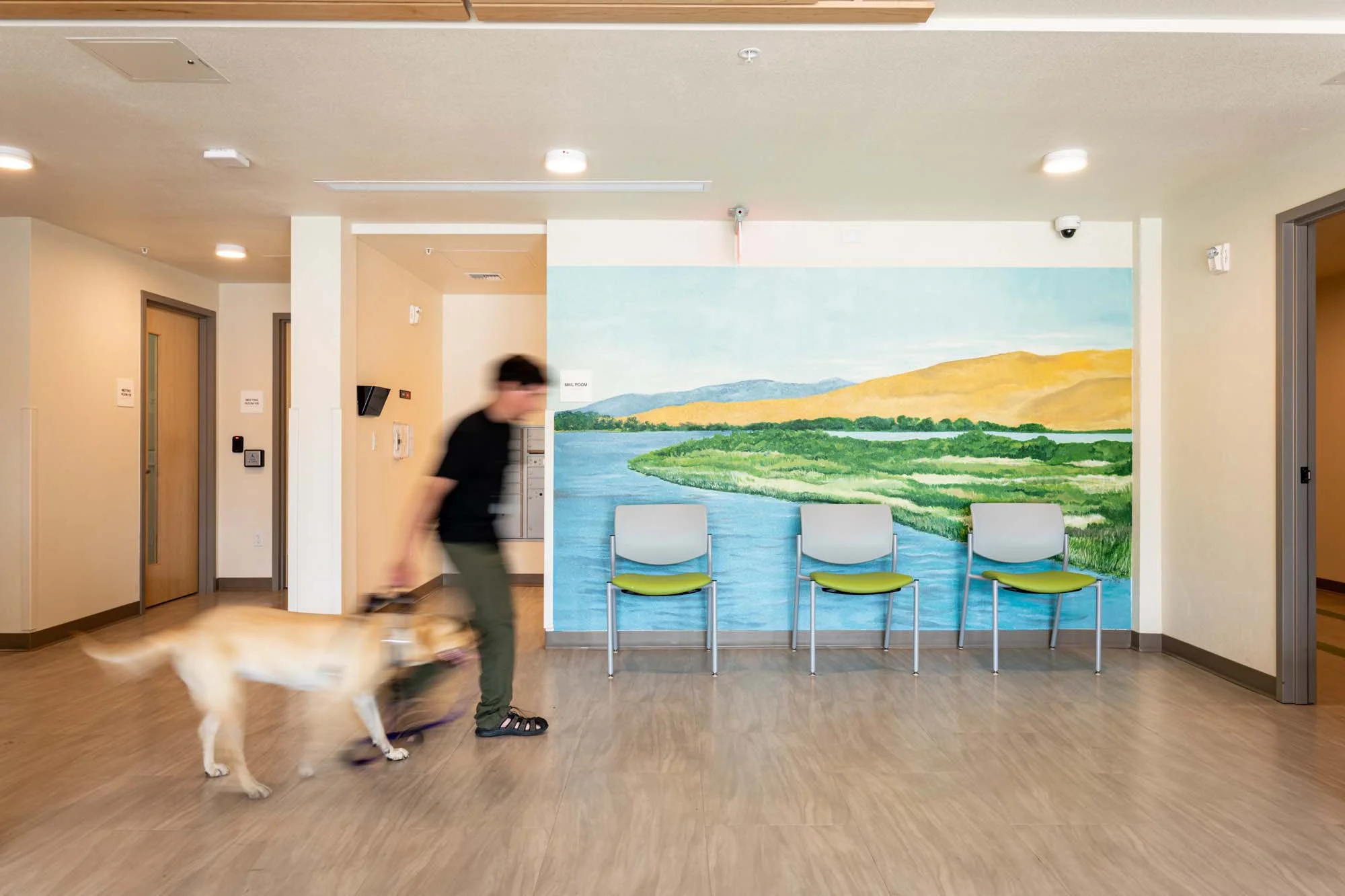
I created work for two additional shared spaces for Heritage House. In the community room, I brought the three plant symbols together on a series of painted columns, representing the ecosystem. And in the lobby, I painted a 9’x14’ mural of the Napa River featuring a natural habitat with multiple native flora and fauna species.
Together, these projects bring beauty and the natural world into daily life, welcoming residents into a shared environment where they can feel at home. The series reads as one body of work across both buildings, the kind of integrated outcome painted work makes possible at architectural scale.
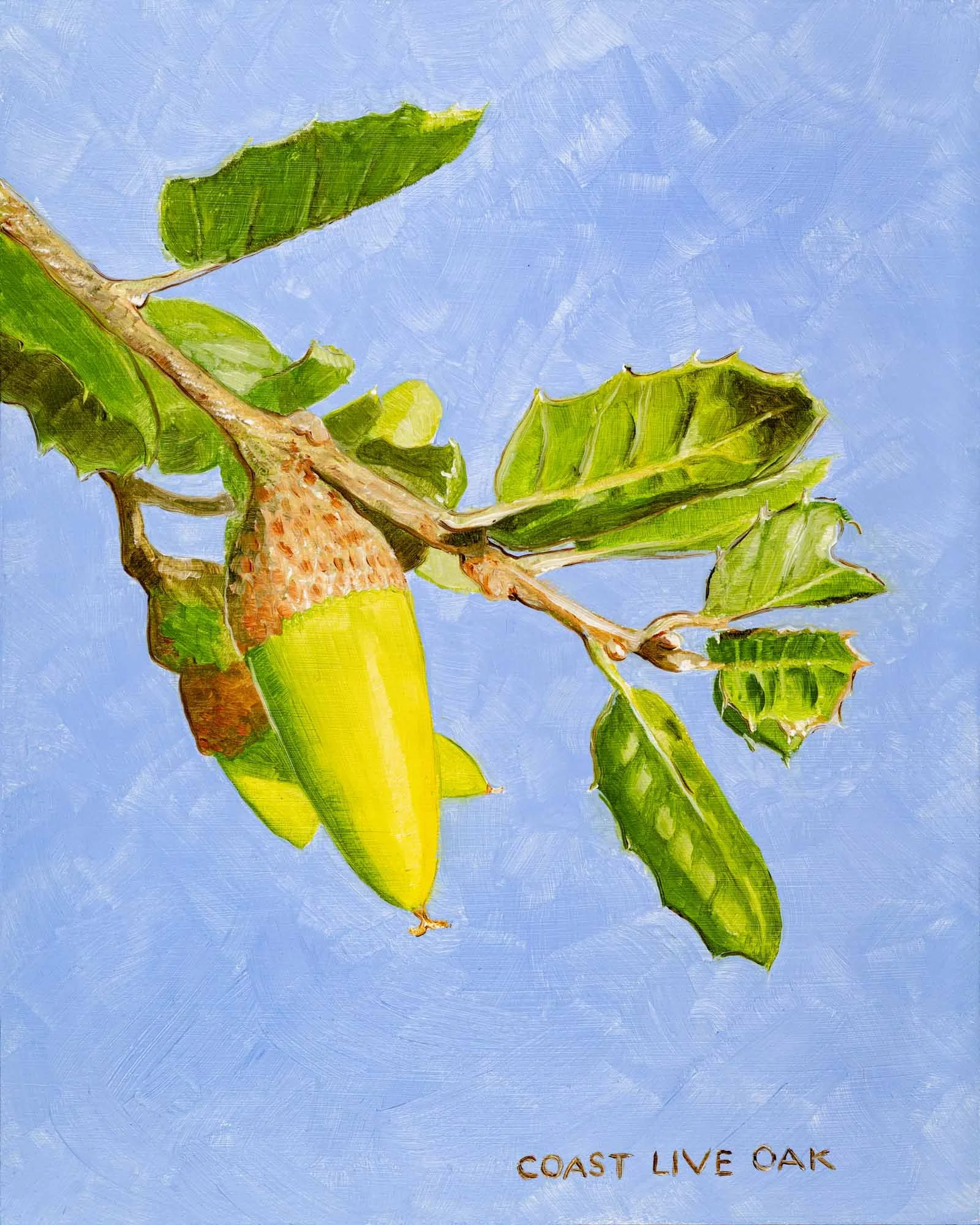
Install shot by Jennifer Huffman


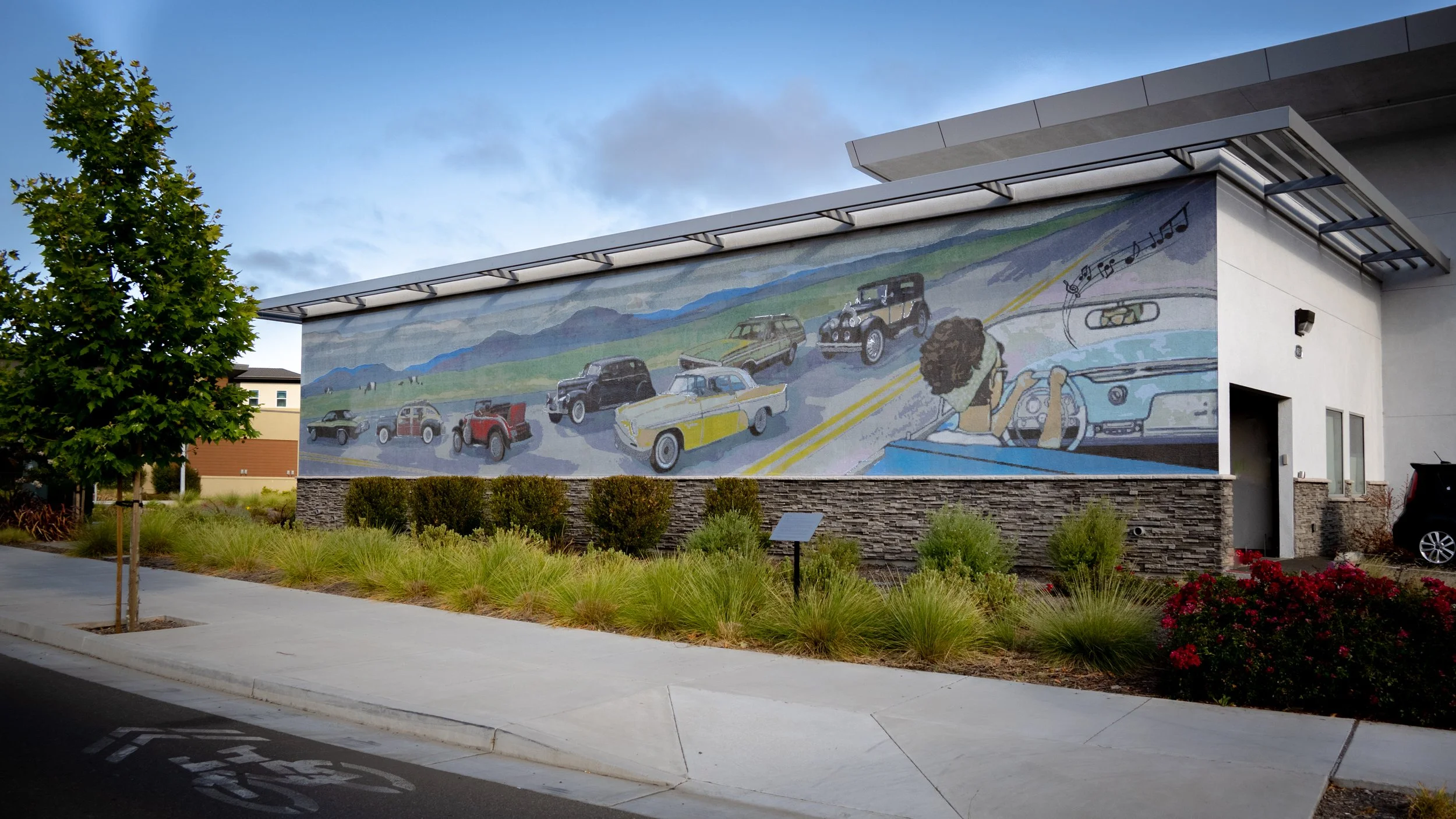
The Gasser Foundation traces its roots to Gasser Motors, the Dodge dealership Pete and Vernice Gasser ran in Napa beginning in 1937. This mosaic covers the eastern wall of the current Chrysler Dodge dealership on Soscol Avenue just steps from where their original dealership stood, and the foundation the couple left to their hometown continues to fund community projects across the valley.
This 960-square-foot exterior mosaic traces the history of Chrysler car design through eight historic Chrysler and Dodge models driving down a two-lane highway, set against a Napa landscape with the Mayacamas Mountains and a group of grazing Belted Holsteins, the "Oreo Cows" familiar to drivers on Highway 29. In the bottom right corner, a 1956 DeSoto Firedome Convertible is seen over the driver's shoulder, its dashboard radio a nod to 1955, when Chrysler introduced the world's first transistor car radio. Musical notes drift from the speaker, marking the shift in recorded music that car radios helped set in motion. The composition reads left to right, the cars driving into the future.
Fabricated in partnership with Artaic and installed by Luliano Construction.

Case Study: On the Road Again: The History of Chrysler Motors
Glass mosaic, 2022. Permanent installation, Hanlees Chrysler Dealership, Napa. Commissioned by The Peter A. and Vernice H. Gasser Foundation.
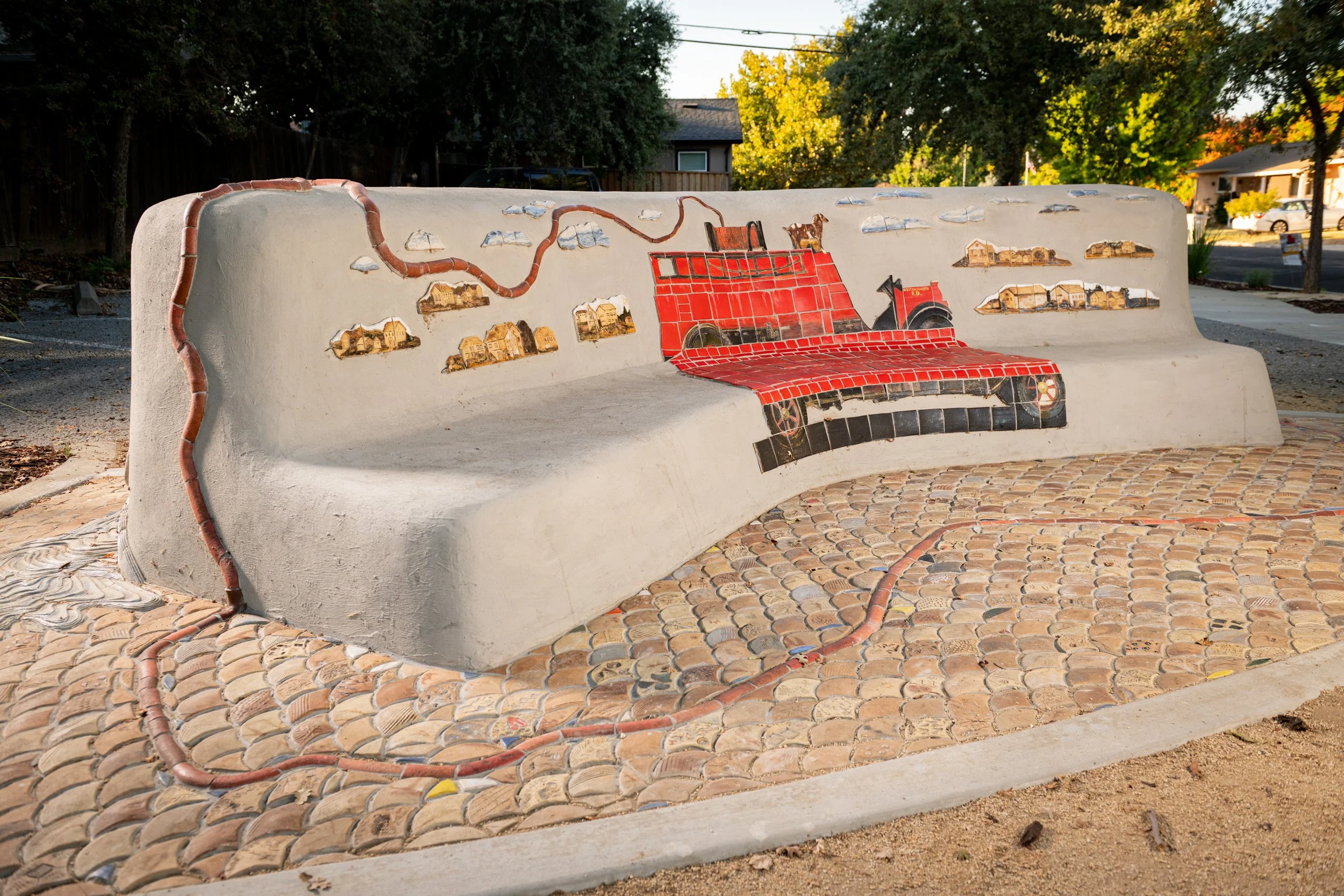
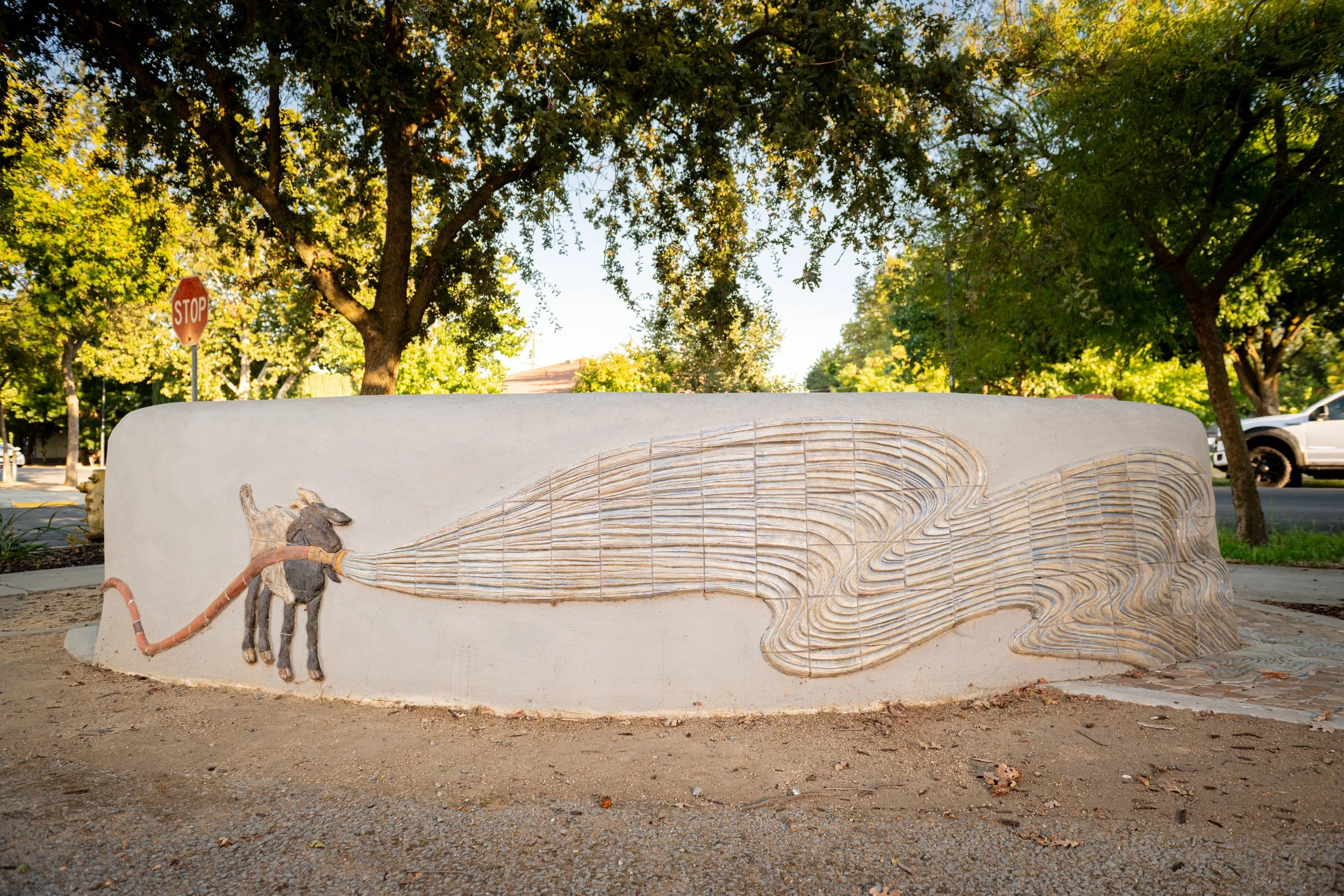

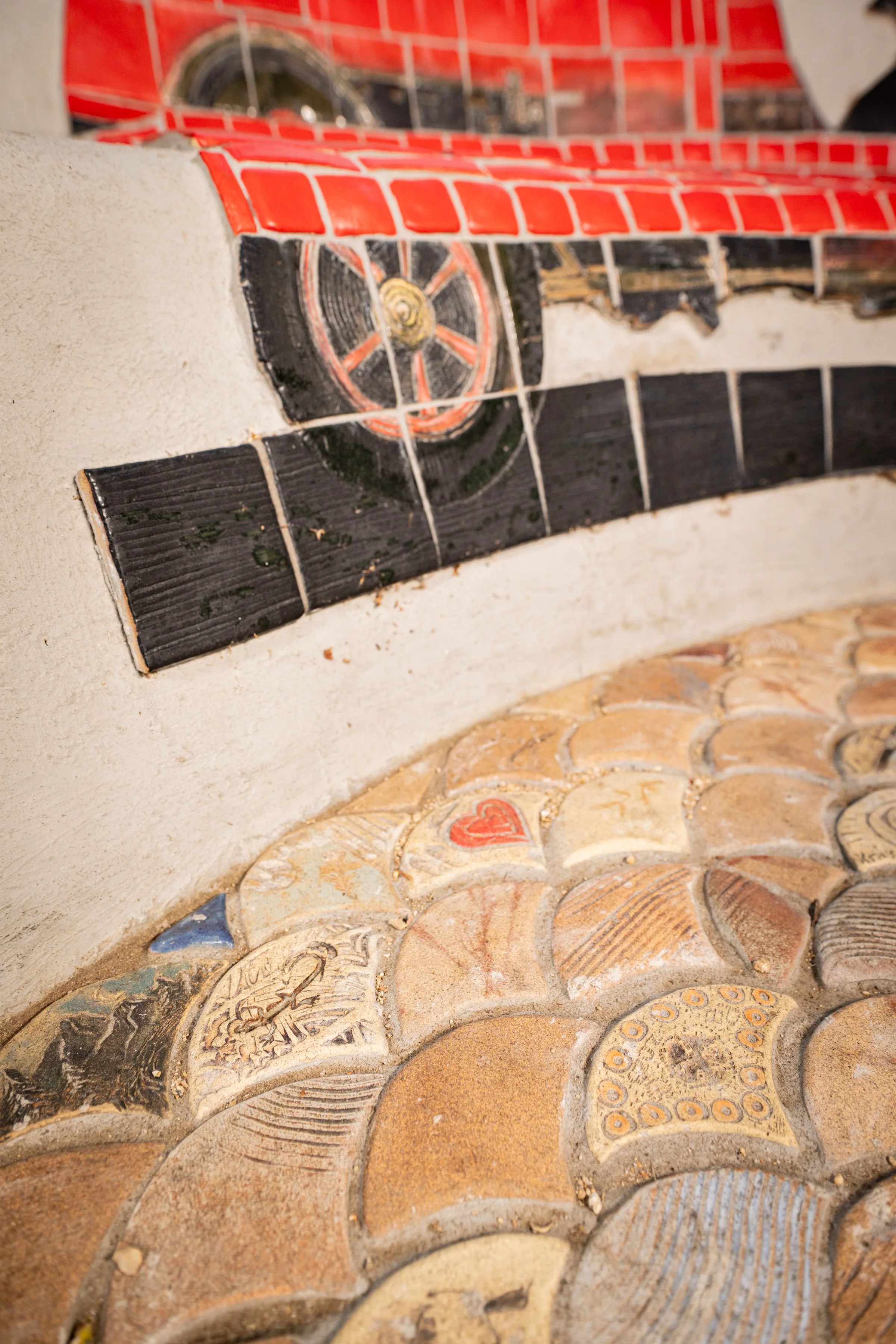
Hand-carved ceramic tile mosaic, 2022–2025. Permanent civic installation. Commissioned by the City of West Sacramento.
Case Study:
Old Mary & the West Sac Goats
A mosaic bench wrapped front to back in hand-built, carved and glazed clay tile, made under the guidance of ceramic artist Sam Tubiolo, my studio mate at the time. Showcased on the front of the bench is “Old Mary”, the beloved historical firetruck that once led West Sacramento's parades. The truck shape follows the long curve of the bench with the neighborhood's houses rising behind her. Her firehose extends up and around to the back, where one of the city's famous "West Sac Goats" holds it in his mouth, spraying a long wave of blue water like a river across the bench.
The West Sac Goats are an actual working herd, deployed by the city to clear dry grass and brush in fire-prone neighborhoods, a contemporary fire-prevention method beloved enough to have earned its own hashtag (#westsacgoats). The piece sets Old Mary's ceremonial past beside the working present of the city's fire prevention.
Fire Station 41 was community-built in 1938, so we carried that spirit forward with a free public workshop, inviting residents to hand-build clay tiles. Those 400+ tiles were installed on the ground surrounding the bench. Thank you to Neil Williams for installation support.
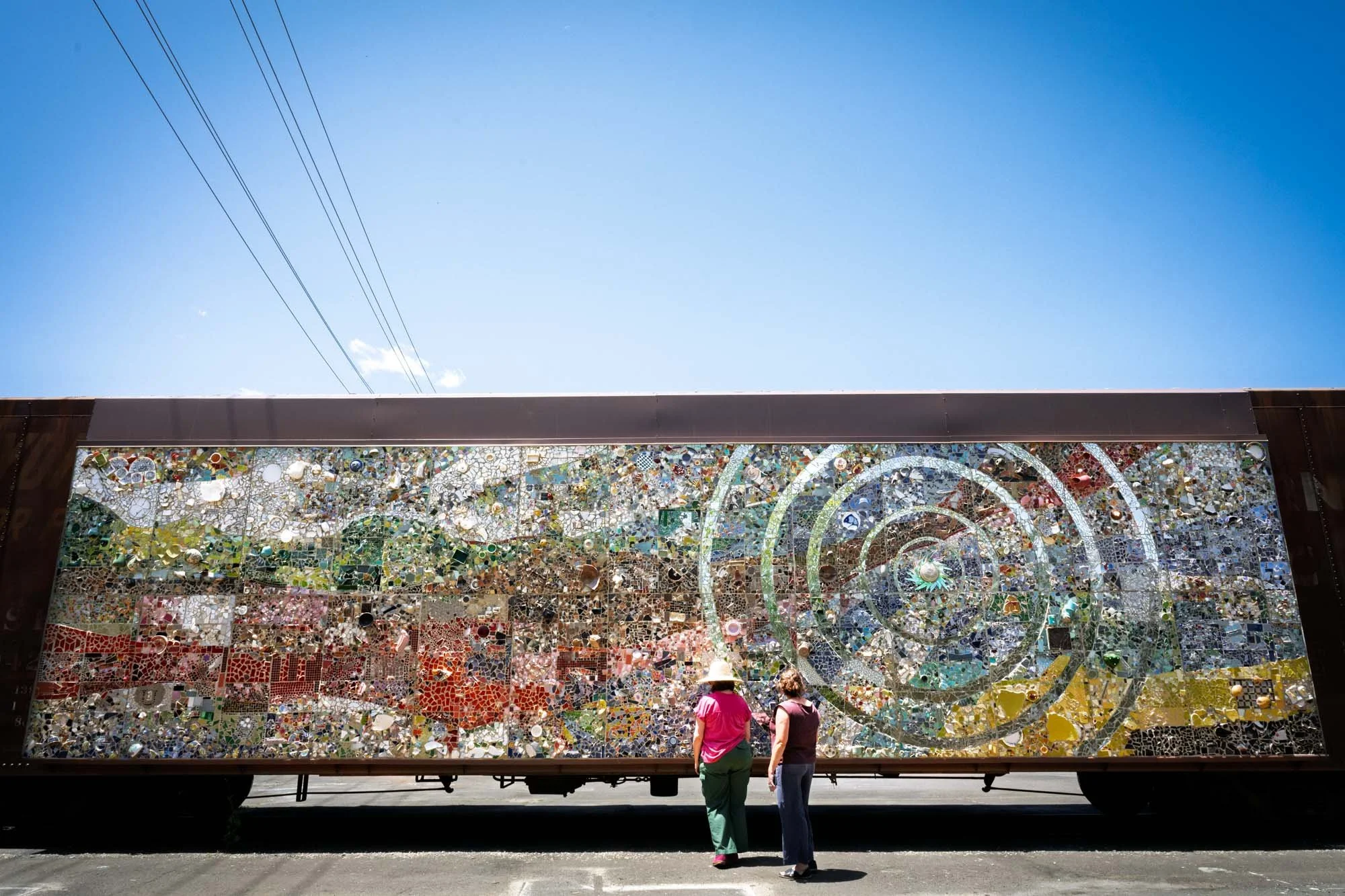
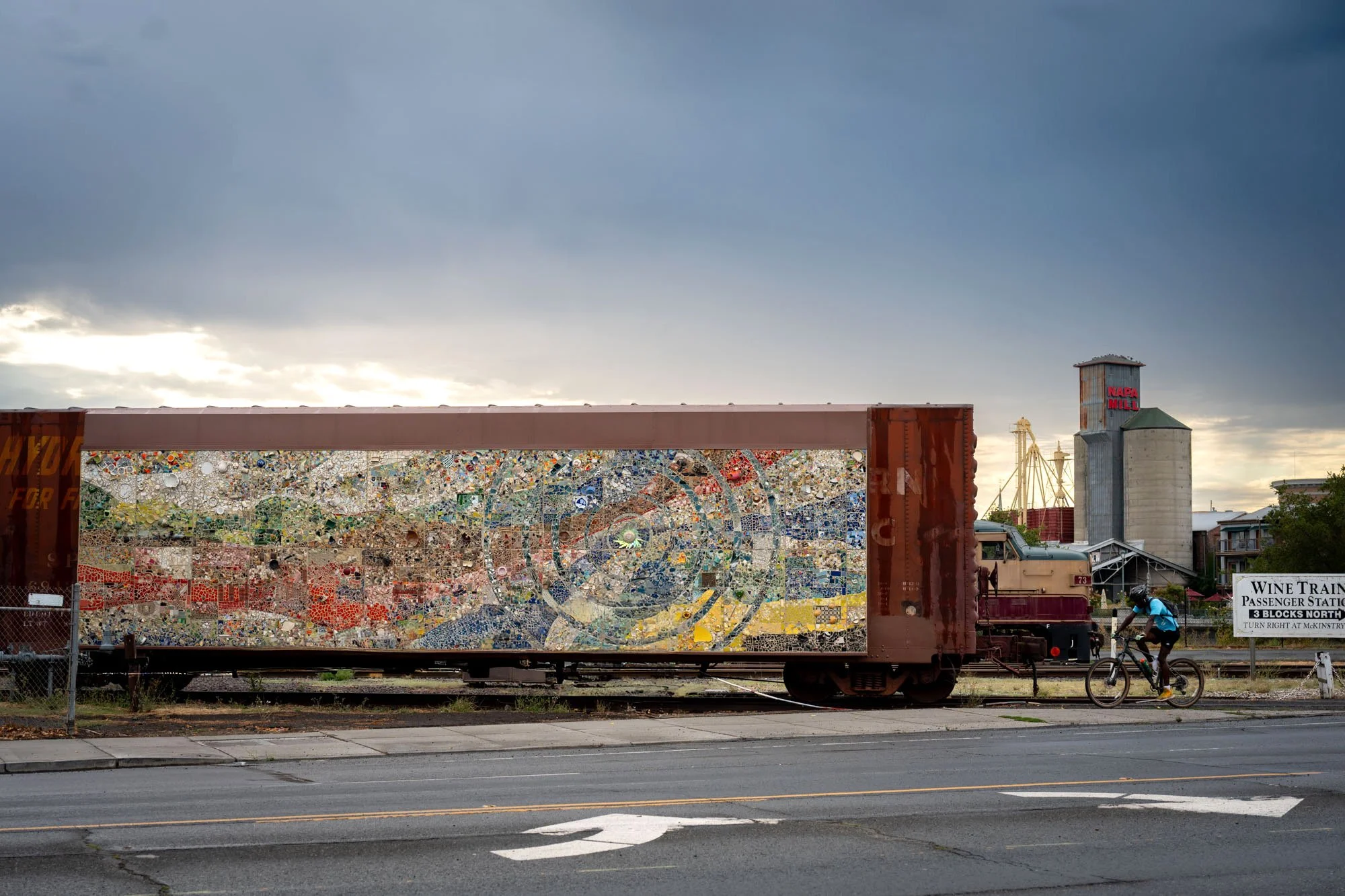
A 400-square-foot mosaic built from thousands of broken household objects, donated by community members after the 2014 earthquake and the 2017 and 2020 wildfires. It's mounted on a retired boxcar donated by the Napa Valley Wine Train, and was made with the local community in partnership with the Rail Arts District (RAD) Napa.
There was no brief and no client, making it different from any other long-term project I've done. It began as an idea among a group of artist friends right after the 2014 earthquake and, over eleven years, became the most demanding creative process I’ve led. Working alongside more than 2,000 people over those years, using the broken things they carried out of the earthquake and the fires, embedded my sense of responsibility and gratitude to this community.
Included as a destination public artwork in the 2026 Visit Napa Valley Visitor Guide.
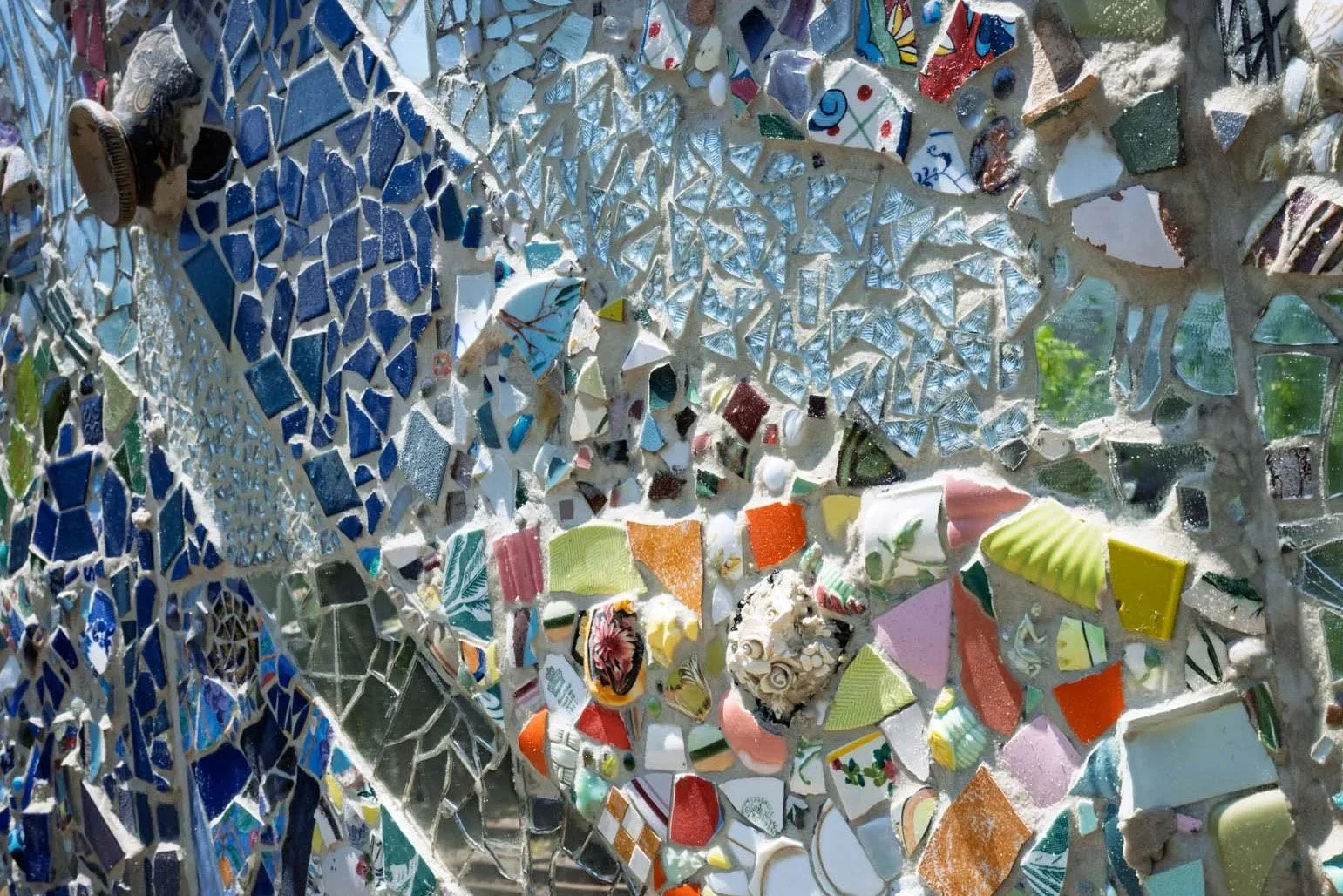
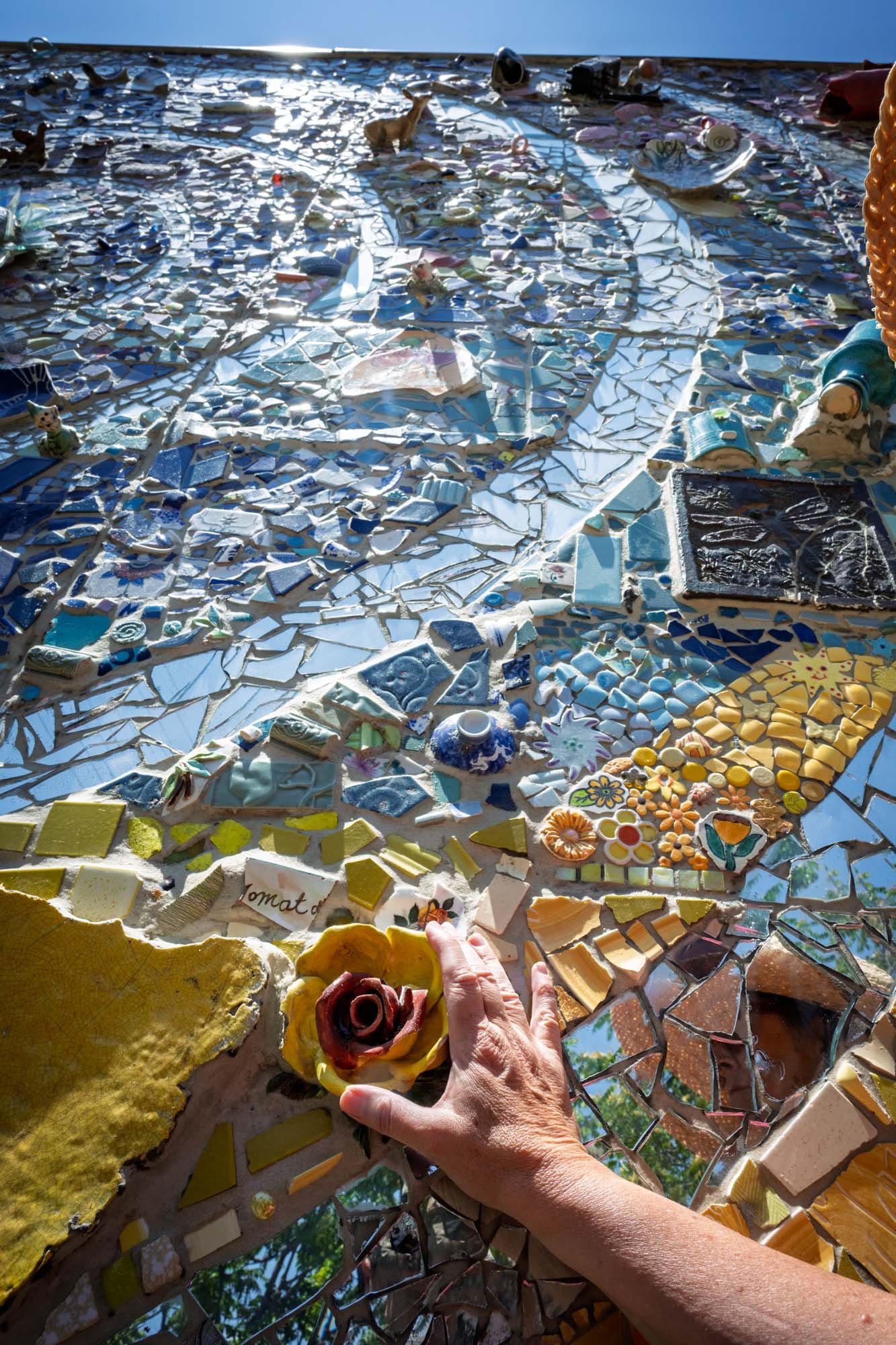
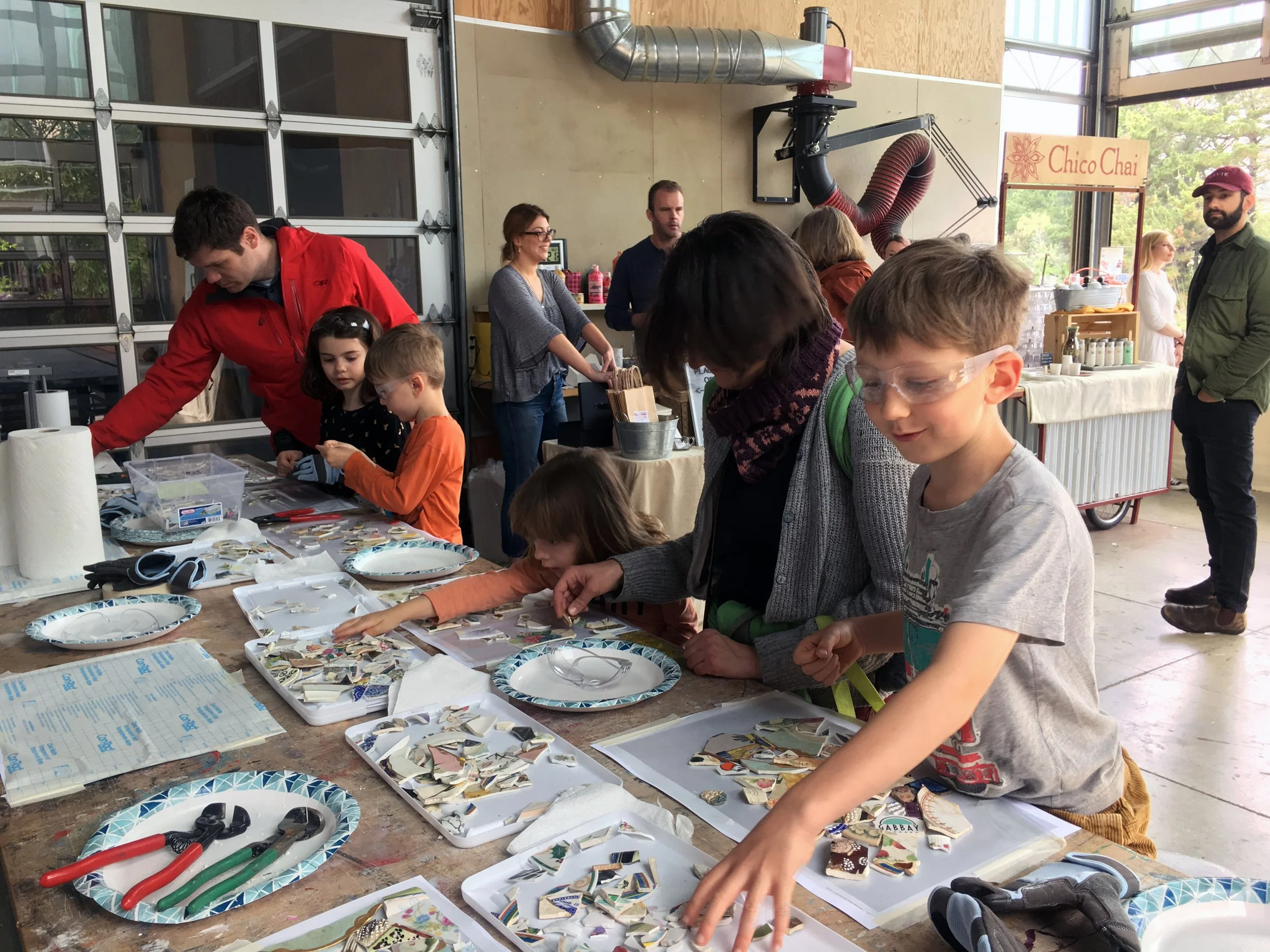
Case Study: Napa Quake Mosaic
Found-object mosaic, 2014 to 2025. Currently on temporary display at the Napa Valley Wine Train yard on Soscol Avenue in Napa, with a permanent downtown location to follow.
Public Art Funders and Partners

Education and Community Partners
Aldea Children & Family Services
With ongoing in-kind support from Devine Paint Center
For commission, hospitality, and illustration clients, see About
How I approach a public art commission
Every project starts with the site. The client holds the container: their vision for the space, what they want it to do, who it's for. I incorporate any existing or relevant design language. I think about how people will move through the space, how the work reads from a distance and how it rewards a closer look over time, how the light changes through the day. I want the work to belong to the site and surrounding community.
If this approach fits a project you're considering, I'd love to hear about it.
Pricing
My public work is custom and priced based on scope, complexity, and intended use. I provide clear proposals so clients understand what's included before work begins. Proposals are scoped to each individual project, whether that's design and art direction or a work built, delivered and installed. Pricing reflects the scale and duration of the project, research and development, design revisions, materials and production, and installation oversight and documentation.
Follow Studio KLY on Instagram