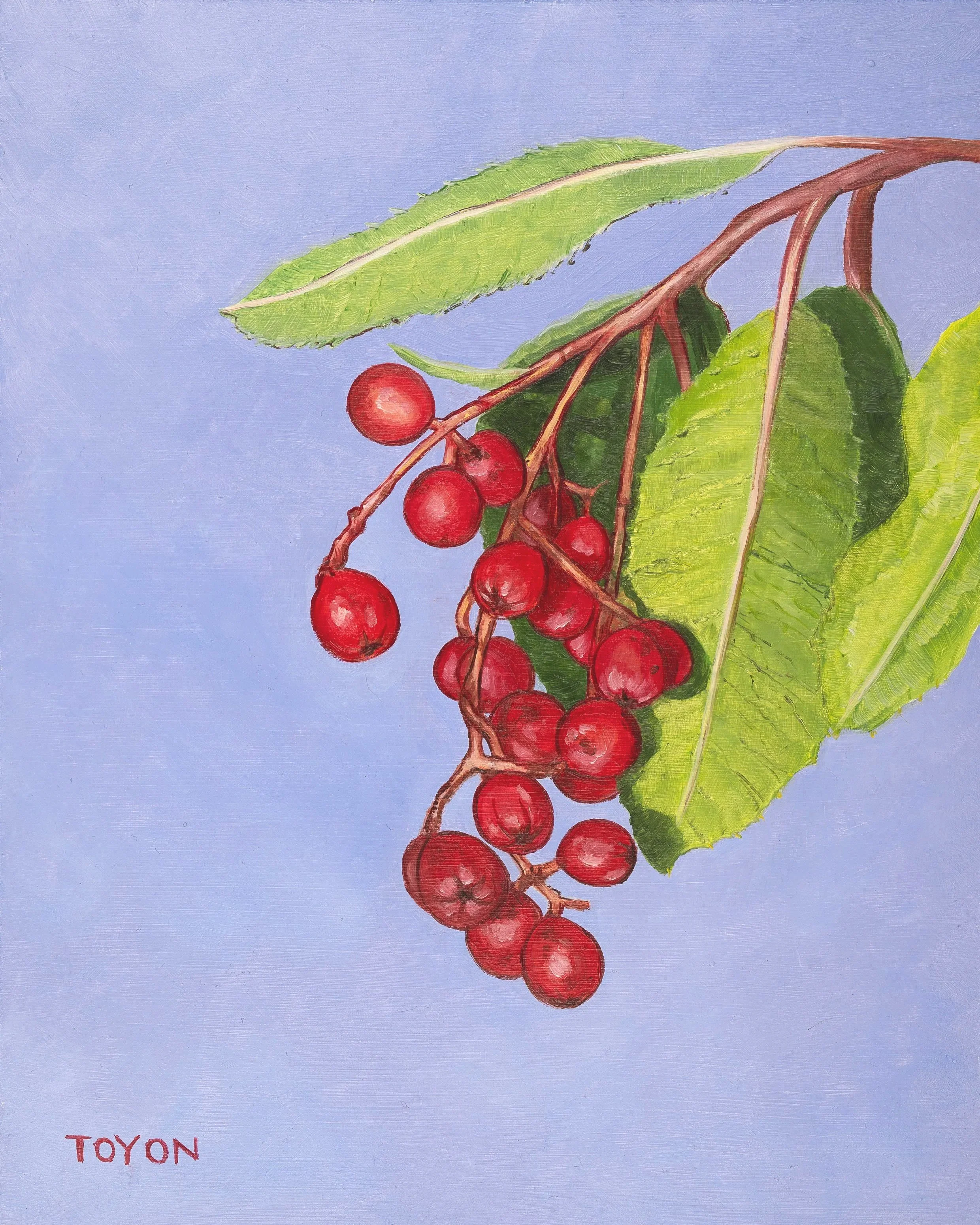
Toyon, featured as the December image in the 2027 Native Flora calendar
Native plants have been here for thousands of years. They’re the foundation of every local ecosystem, supporting the insects that feed the birds, the bees that pollinate our food, the soil and water cycles that hold the landscape together, and of course, in the end, us.
I've been painting California natives for a long time. The Coming Home series at Heritage House in Napa was my deep dive into them, and now they fill my calendars and cards. Part of the reason is simple: I want people to notice them, learn their names, and fall a little in love with them, because we look after what we love. Below is my non-scientist's case for why they're worth knowing, and why right now, in fall, is the best time to plant one.
But what about Oak?
But first, what makes a plant "native"?
A native plant is one that evolved in a particular place over thousands of years, alongside its soil, climate and wildlife. In North America, that usually means plants that were here before European settlement. Native is always local: a plant native to Napa's oak woodlands can be out of place a few hundred miles away, and wherever you live, your region has its own. Here in California, that means plants adapted to our long dry summers and wet winters, and we're unusually rich in them: more than 6,000 native plants, about a third of which grow nowhere else on earth.
Why do native plants matter for wildlife?
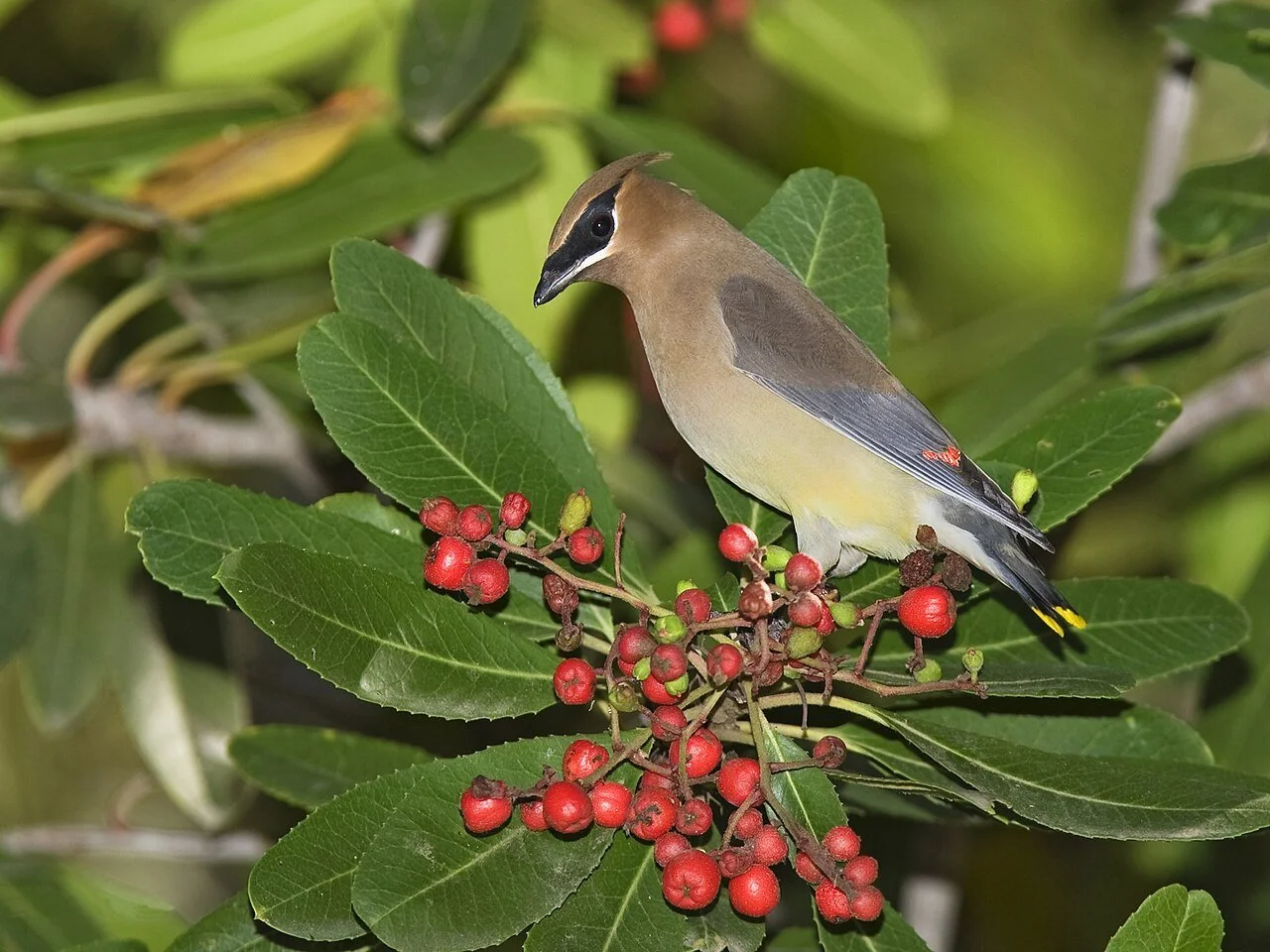
Cedar waxwing on toyon. Photo: Kevin Cole, CC BY 2.0, via Wikimedia Commons
This is the part that changed how I look at a garden. Monarchs pass through Napa on their migration, and as many of us know, their caterpillars eat only milkweed. A lot of insects are just as particular: many butterflies and moths can only raise their young on the native plants they evolved with, and those caterpillars are what our songbirds feed their chicks. Lose the plant and you lose everything that depended on it.
Western monarchs show how fast that can happen. In the late 1990s, volunteers counted more than a million monarchs wintering along the California coast. The 2025 count found about 12,000. Native milkweeds, like the narrowleaf and showy milkweed that grow here in Napa, are a big part of how people are working to bring them back. Napa RCD's Napa County Native Milkweed Guide shows which ones grow here and how to tell them apart.
Oaks are the champions here. Native oaks host more kinds of caterpillars than almost any other plant, hundreds of species. That's a big part of why the new Studio KLY logo is a pair of valley oak acorns: I love how many creatures make their home in a single oak.
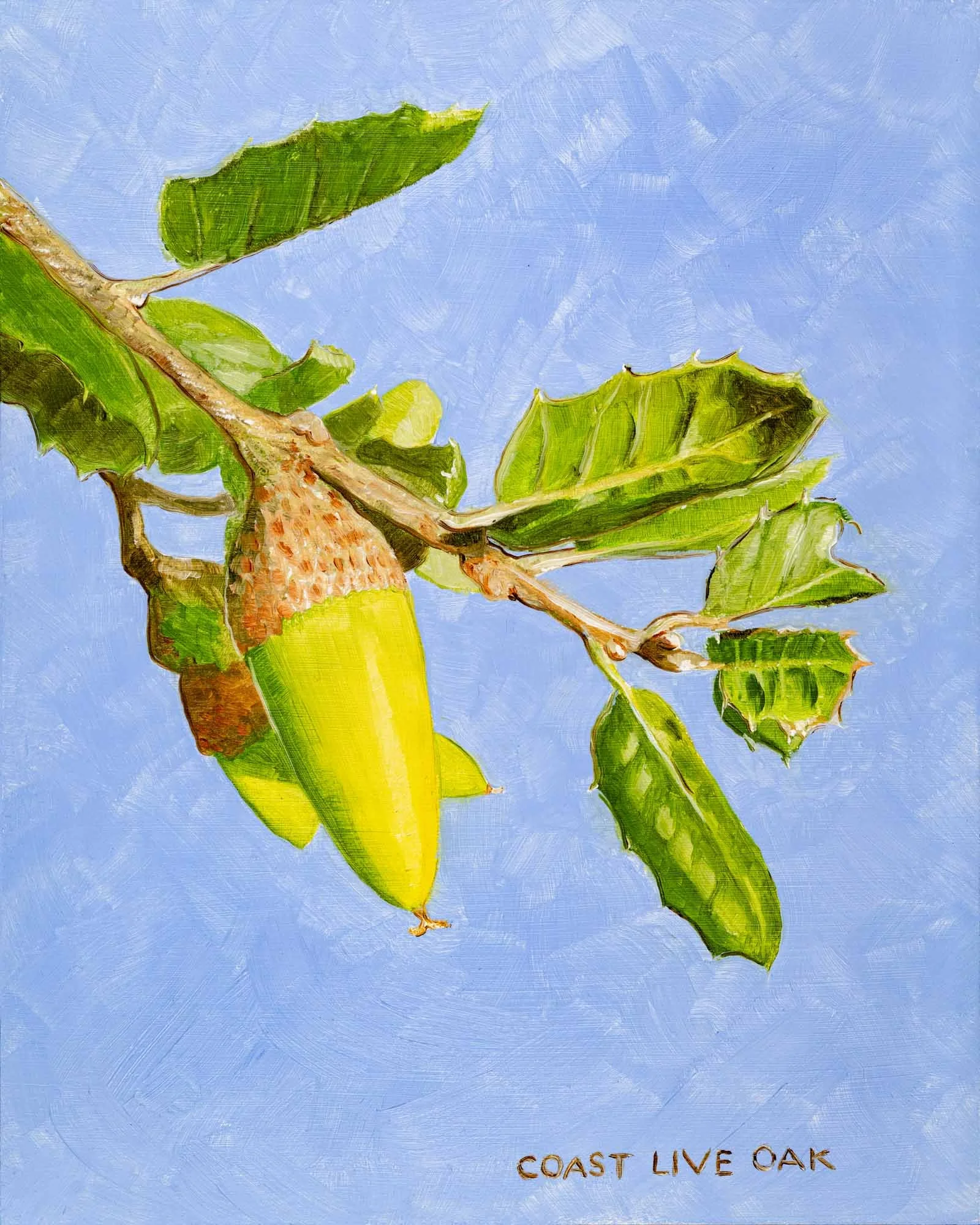
Coast live oak, one of my native plant paintings for the Coming Home series at Heritage House in Napa.
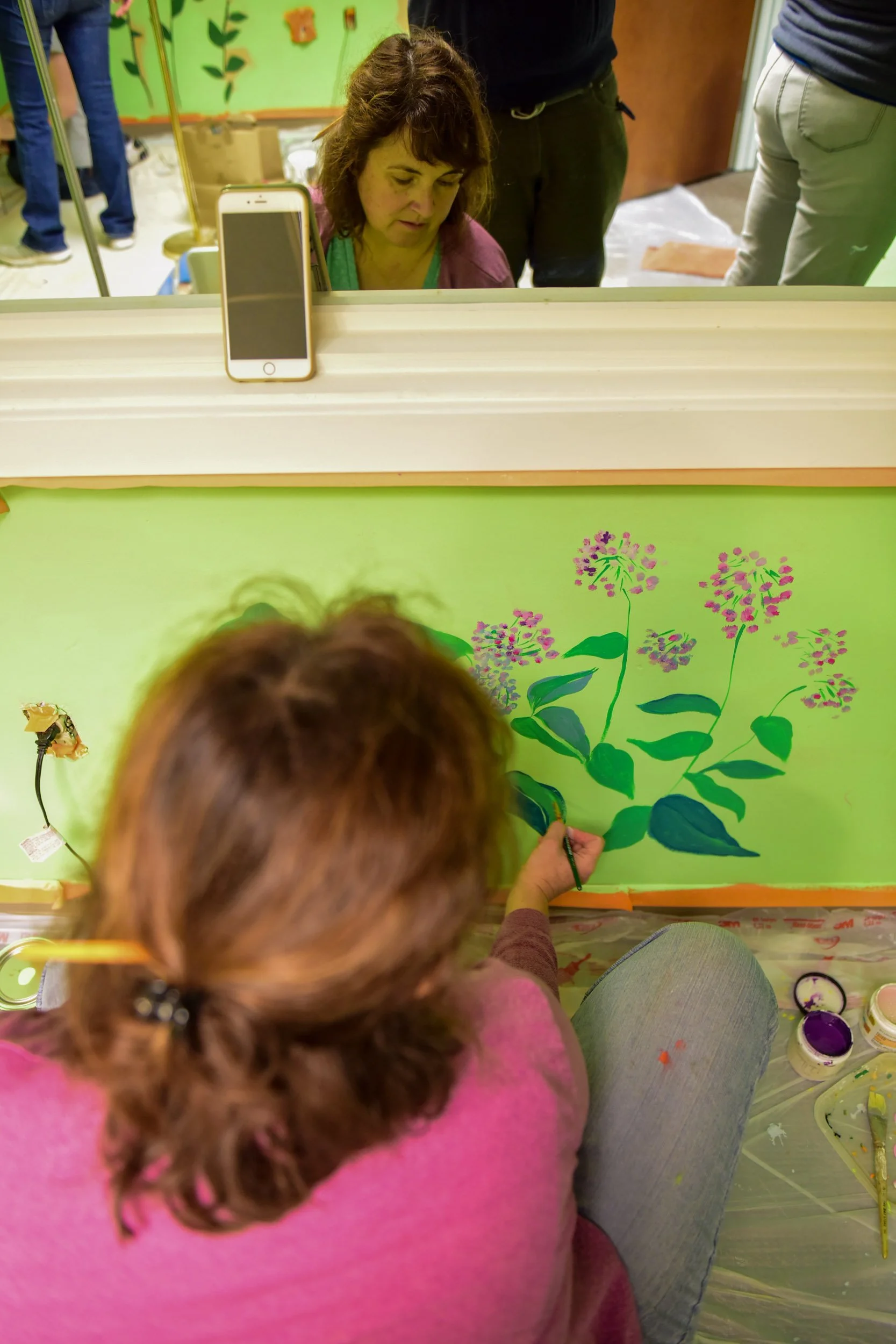
Me painting milkweed for the children’s waiting room at Aldea’s Monarch Justice Center with support from Napa Sunrise Rotary Club and the Aldea staff (2020).
Why does wildlife matter to us?
It can sound like a nice extra, something for people who like butterflies. It isn't. The same web that feeds a monarch or a songbird feeds us.
Food. About a third of the world's food crops depend on animal pollinators: bees, butterflies, moths, beetles and birds, many of which need native plants to survive. The USDA puts it as roughly one in every three bites we eat.
Water and soil. Deep-rooted native plants hold hillsides in place through winter storms, slow rainwater down so it soaks in instead of running off, and help keep our creeks and the Napa River healthy.
Balance. Birds and beneficial insects keep plant-eating pests in check, in gardens and on farms, with less need for spraying.
All of this happens slowly. A field gets paved or a hillside cleared, and the losses show up decades later: fewer butterflies, quieter mornings, a creek that floods faster than it used to. Planting natives is one of the few ways most of us can work on the other side of that equation, right where we live.
Tell me more about the specific plants in the calendar.
Every plant featured in the 2027 calendar has a specific role to play in our local ecosystem:
Indian Plum (February) is one of the first natives to bloom, an early nectar source for native bees.
Western Chokecherry (May) is a host plant for several native moths and butterflies, and its dark fruit feeds wildlife.
California Angelica (August) is a host plant for the anise swallowtail butterfly.
Pacific Madrone (September) feeds birds with its orange-red berries.
Toyon (December) fruits in winter and is a major food source for robins and waxwings.
Besides all of these reasons, I chose them because I wanted to paint them. But once you know what each plant supports, it's hard to just see them as part of the background.
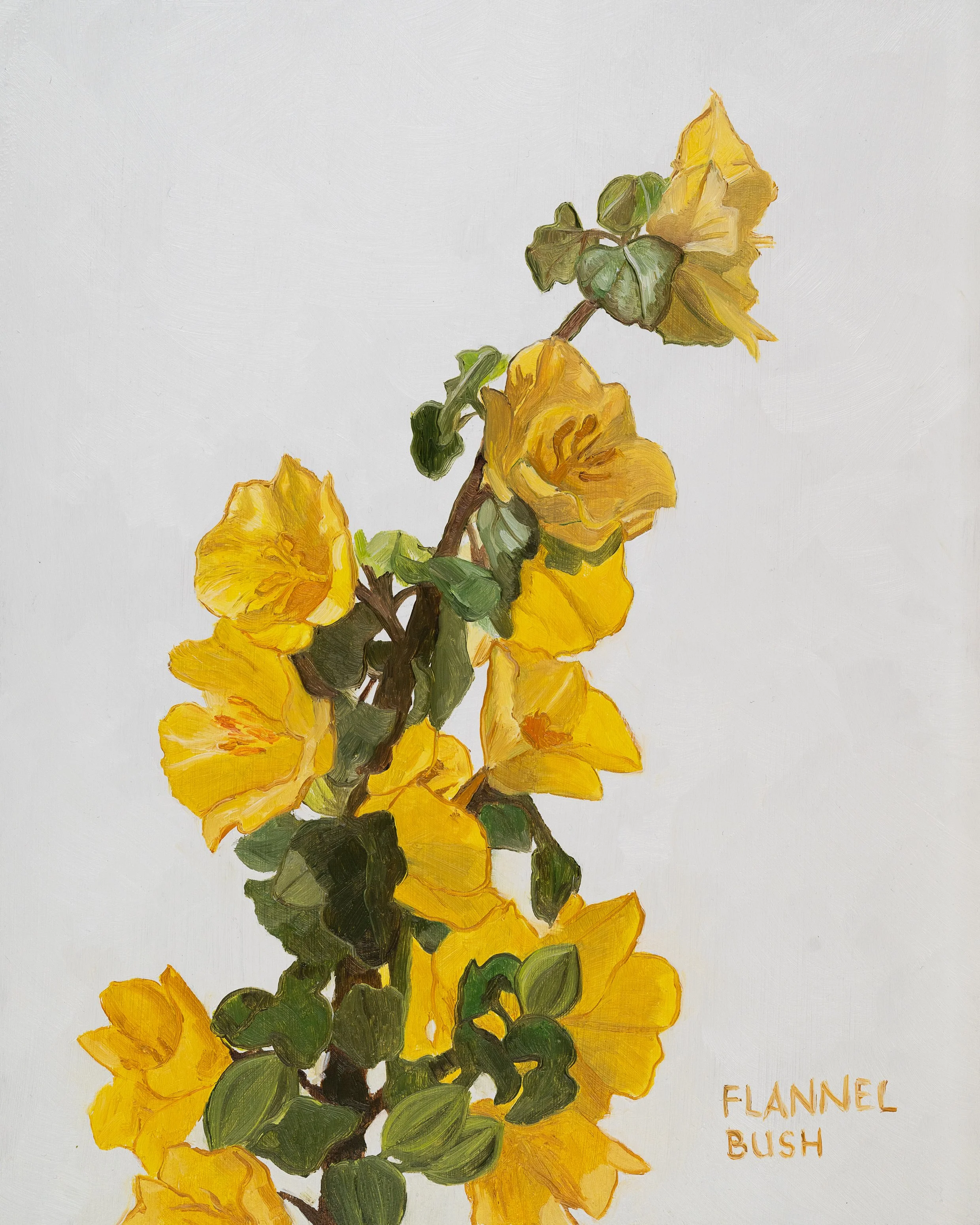
California Flannel Bush, April’s featured native plant in the 2027 calendar
Do native plants really use less water?
Once they're established, yes, many natives need far less water than typical garden plants, and some want no summer water at all. California Flannel Bush (my April calendar girl) is one of them: the California Native Plant Society's Calscape guide says never to irrigate it once it's established, even when it looks like it needs a drink. In a state that cycles in and out of drought, that's a real gift.
Why plant natives in fall and winter?
In California, fall through winter is native planting season, the reverse of the spring planting rush most of us grew up with. The soil is still warm from summer, the days are cooler, and the winter rains do the watering for you. Roots keep growing all winter while the tops rest, so by the time the long dry summer arrives, a fall-planted native has a deep head start and needs far less help from you.
A few things make it go well. Water new plants in at planting time and keep them moist until the rains settle in. Local native gardeners have a simple rule: put a wet plant in a wet hole. And skip planting into soggy, waterlogged soil right after a big storm; give it a few days to drain.
How can I help?
You don't need to rip out your garden. A few small steps go a long way:
Add one native. Next time you're planting, tuck a native in alongside everything else. Calscape lets you type in your address and see what's native to your exact area.
Leave some leaves. Many caterpillars finish growing in the leaf litter under trees.
Plant an oak, if you have room. It's the single most generous thing you can put in the ground, and fall is the time to do it. No room? Napa RCD is hosting its annual Community Oak Planting Day on Green Friday, the day after Thanksgiving usually in Alston Park (this year, November 27).
Support the people doing the work. Locally, the Napa Valley Chapter of the California Native Plant Society runs plant sales, walks and restoration projects. Through December 31, a portion of proceeds from my shop will support their work. But every community has a local chapter, so check for yours.
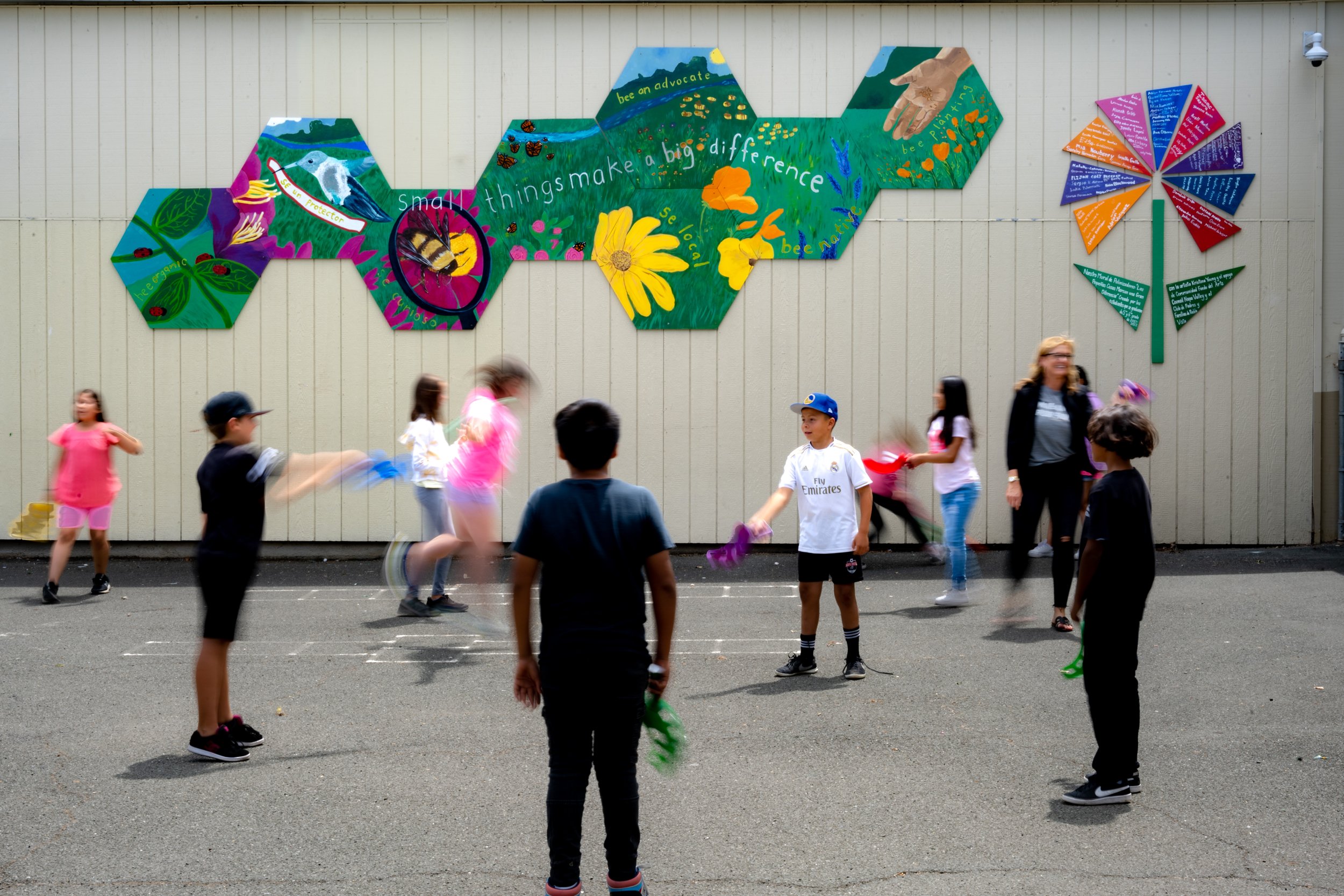
“Small Things Make a Big Difference” | Pueblo Vista Magnet Elementary, Napa, CA | 2022
A pollinator mural painted with students, with expertise from local beekeeper Rob Keller of Napa Valley Bee Co. and geographer and Napa County Supervisor Amber Manfree. Produced with support from Arts Council Napa Valley’s Community Fund Grant and the PVES Family Club. Image by: Infinity Visuals
A few quick questions
Are native plants harder to grow? Usually easier, once they're settled, as long as you plant them in the right spot, plant in fall or winter, and don't overwater.
Is "native" the same as "drought tolerant"? No. Plenty of drought-tolerant plants come from other dry places, like the Mediterranean or Australia. They can save water, but they don't feed our local insects the way natives do.
Do I have to go all-native? No. A healthy place is a diverse one. I grow non-natives in my own backyard garden, and the small farms I love, like Tomgirl Farms, grow vegetables and flowers from all over the world. Natives are simply the part of the mix that's easiest to overlook, and every one you add gives local insects and birds something more to eat.
I'll keep painting these plants because I love them - the red peeling madrone bark, the bright toyon berries against a winter gray. I hope knowing a bit more about what they're doing out there makes you love them a little more too.